
Solutions
micro-credentials
•7 min readEmployers are paying more for verified skills, not degrees. See the 2026 data on micro-credentials, hiring outcomes, and how Certopus makes verification effortless.

Khushi Bhatia
Updated on Jul 09, 2026
In this article
Ready to automate?
Join thousands of organizations using Certopus to issue verifiable digital credentials.
Get Started FreeHow Employers Are Using Micro-Credentials to Upskill (and Why Getting Seen Matters More Than Ever)
Hiring platforms are drowning in AI-generated resumes. Every candidate suddenly has "advanced problem-solving skills" and "proven leadership," because a chatbot wrote it for them. Employers can't tell who actually knows what they claim to know and job seekers can't stand out just by saying the right words anymore.
This is exactly why skills-based hiring is having a moment, and micro-credentials are the format driving it. A microcredential is a compact, competency-based qualification smaller than a full degree or certification — that proves a learner has mastered one specific skill. It usually comes as a digital badge or digital certificate, something that can be shared, verified, and checked in seconds. In a hiring market where resumes are easy to fake but skills are not, that verification layer is becoming essential.
What Is a Micro-Credential?
A micro-credential is a short, competency-based digital credential a badge or certificate issued after a learner demonstrates one specific, job-relevant skill. Unlike a four-year degree or a broad professional certification, it's narrow by design: one skill, verified, portable, and built to be checked in seconds rather than through a phone call to an admissions office.
The Data Behind the Shift
The numbers make the case better than any pitch could. 94% of employers are willing to offer higher starting salaries to graduates who hold micro-credentials. 92% say entry-level hires with micro-credentials outperform their peers in the first year on the job.
That's not a marginal preference that's employers actively rewarding verified, specific skills over generic degree lines.
This shift didn't happen in a vacuum. Generative AI triggered a sudden, sharp demand for new skills, and students know it. They see GenAI fluency as core to their career growth, and they need to build it fast. Traditional universities can't keep up with that pace. A four-year curriculum revision cycle, gated by academic committee approval, often means a new AI course is outdated by two full technology cycles before it's even taught. Micro-credentials and the broader shift toward reskilling and continuous upskilling fill that gap: shorter, faster to build, faster to earn, and directly tied to what the market needs right now.
Where the Micro-Credential Model Still Falls Short
Micro-credentials aren't perfect yet. Learners consistently say they want more than a quiz at the end of a course. 92% prefer applied projects or interactive assessments that actually test whether they can do the thing, not just recall it.
The Applied Assessment Gap
Yet fewer than 34% of credential issuers currently offer that kind of hands-on evaluation. That gap matters. Without applied assessment, a badge risks becoming just another line item nobody trusts. It's the same problem micro-credentials were supposed to solve in the first place.
Closing this gap is what separates credentials that actually move careers from ones that just sit in a LinkedIn "Licenses & Certifications" section.
Badges Are Easy. Trust Isn't. Certopus Builds Both
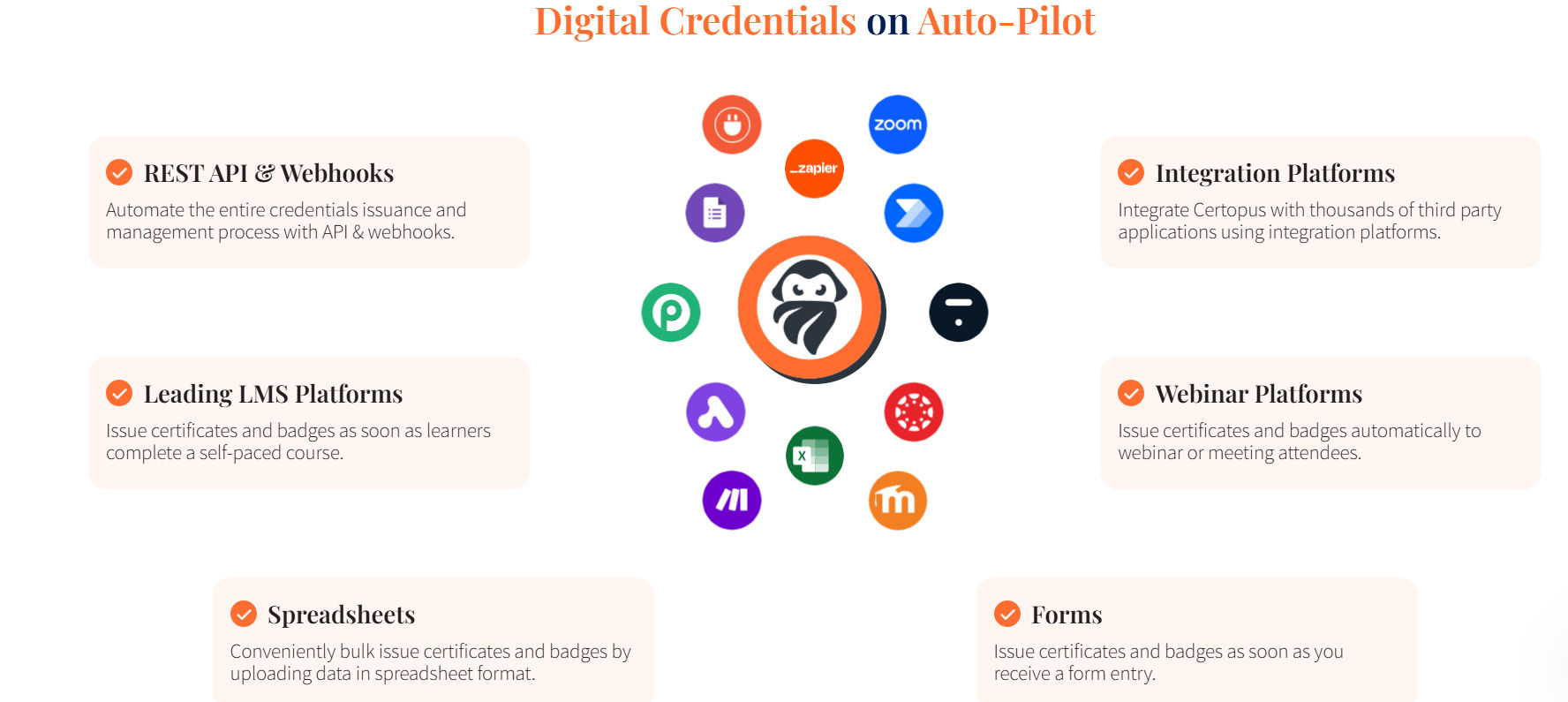 This is where Certopus comes in. Certopus is a digital credentialing platform built to help institutions and companies issue, manage, and verify micro-credentials at scale without the manual chaos of spreadsheets, generic PDFs, or credentials nobody can confirm.
Built-In, Traceable Verification
Every badge issued through Certopus carries built-in verification, so an employer isn't taking a candidate's word for it; they're seeing a credential that's traceable back to the issuing organization.
For employers using micro-credentials to upskill their workforce, that verification is the real advantage. It turns "I completed a course" into "here's proof, and here's exactly what I can do." For employees, it means the specific skill they picked up whether it's a new AI tool, a compliance certification, or a technical competency actually counts toward how they're evaluated and promoted, instead of getting buried in a resume nobody fully believes anymore.
Certopus and Spoteleven: Closing the Loop Between Skill and Job

Earning a verified skill is only half the equation getting seen for it is the other half. This is where Spoteleven changes the hiring experience. Spoteleven is built around a simple idea: a better way to get hired that goes beyond keyword-matching resumes.
Instead of a static resume filtered by an algorithm, Spoteleven uses short video introductions, giving employers a real sense of a candidate's communication style and energy in 60 seconds something no bullet point can convey. Instead of self-reported skills that employers just have to trust, Spoteleven works with independently verified credentials, so what a candidate claims is backed by proof before the first call even happens. And instead of mass job board applications lost in a pile, Spoteleven's curated matching connects verified professionals directly with hiring companies through a real talent team not a spray-and-pray application queue.
Ready to modernize your credentialing? Book a demo
How the Two Platforms Work Together
Certopus issues and verifies the micro-credential itself, and Spoteleven surfaces that verified skill to the right employer through video, verification, and curated matching. A learner earns a badge through Certopus for mastering a skill, and that same verified credential becomes visible and trusted inside Spoteleven's hiring pipeline. Employers get candidates whose skills are already confirmed. Candidates get past the resume filter entirely, because their credential speaks before their resume does.
What This Means Going Forward
The future of micro-credentials isn't just about issuing more badges it's about closing two gaps at once: the gap between learning and applying a skill, and the gap between having a skill and being seen for it. Employers offering higher pay and better outcomes to micro-credentialed hires already signals where hiring is headed. Platforms that combine verified issuance with applied assessment, and connect that credential directly to real hiring conversations, are the ones that will define how upskilling actually translates into careers.
For employers, that means fewer guesses. For employees, that means a skill that once lived quietly on a certificate can now open doors because it's verified, visible, and impossible to fake.
Ready to issue verifiable credentials?
Book a personalized demo with our founder to streamline your digital credentialing workflow.

Frequently Asked Questions
Micro-credentials benefit roles where skills evolve quickly, including IT, cybersecurity, data analytics, digital marketing, healthcare, education, project management, and customer success. Employers value verified, job-ready skills that can be demonstrated instantly. With Certopus, organizations can issue secure, verifiable micro-credentials that help candidates showcase expertise and stand out in competitive hiring.
Yes. You can list micro-credentials in a dedicated Certifications or Professional Development section of your CV. Include the credential name, issuing organization, completion date, and a verification link. Certopus provides secure, shareable digital credentials with QR codes and verification pages, making it easy for recruiters to validate your skills instantly.
Certopus issues every badge with built-in, traceable verification back to the issuing organization, so employers can confirm a credential is real without contacting the issuer manually.
Yes. Employers increasingly value micro-credentials because they verify specific, in-demand skills that traditional degrees may not reflect. They are especially useful for hiring, promotions, and internal upskilling. Certopus helps organizations issue trusted, tamper-proof digital credentials that make skills easy to verify and improve confidence in hiring decisions.
Additional Resources
Certopus Case Studies
See how institutions use Certopus
What Are Digital Credentials?
Platform overview
Blockchain in Credentialing
Technology explanation
Professional Development Programs
Learning solutions
Micro Credentials for Higher Education
Educational pathway