
Solutions

Verifiable Credentials
•11 min readExplore the pros and cons of blockchain verifiable credentials, from security and trust to interoperability challenges.

Khushi Bhatia
Updated on May 14, 2026
In this article
Ready to automate?
Join thousands of organizations using Certopus to issue verifiable digital credentials.
Get Started FreeIntroduction
In an increasingly digital world, the need for secure and verifiable identity management has never been more critical. Verifiable credentials represent a revolutionary approach to identity verification and credential management through blockchain technology. Whether you're exploring blockchain for business applications or seeking digital signature solutions, understanding verifiable credentials is essential.
This comprehensive guide explores the pros and cons of verifiable credentials on blockchain, examines how this technology integrates with identity and access management systems, and explains why leading platforms like Certopus are championing this innovation. We'll cover everything from blockchain meaning and applications to practical use cases and real-world implementations.
What Are Verifiable Credentials? Definition & Meaning
Verifiable credentials meaning refers to digital credentials that are cryptographically secured and can be verified without depending on a central authority. These are essentially digital representations of traditional credentials—education certificates, professional licenses, or identity documents—stored and managed through blockchain technology.
Verifiable credentials definition: A verifiable credential is a tamper-evident claim about an individual or organization, issued by a trusted authority and verified using cryptographic hash functions on a blockchain network.
Key characteristics of verifiable credentialing systems include:
- Digital Signature: Cryptographic proof of authenticity
- Decentralized Storage: Data stored on blockchain networks rather than centralized servers
- Instant Verification: Real-time credential validation without intermediaries
- User Control: Individuals maintain ownership of their credentials
- Blockchain Security: Immutable and transparent record-keeping

Understanding Blockchain Technology: Foundation for Verifiable Credentials
Before diving into verifiable credentials blockchain applications, it's essential to understand what blockchain is and how it works.
Blockchain Meaning & Explanation
Define blockchain: Blockchain is a distributed ledger technology that records transactions in a secure, decentralized, and immutable manner. Think of it as a digital ledger shared across multiple computers, where each "block" contains transaction data linked to previous blocks through cryptographic hashing.
Blockchain definition: A blockchain is a chain of blocks containing data records, linked together using cryptographic hash functions, managed across a network of computers without central authority.
How Blockchain Technology Works
The blockchain meaning becomes clearer when you understand its operation:
- Transaction Recording: Data is collected and broadcast across the network
- Cryptographic Hash Function: Each block is secured using unique cryptographic identifiers
- Network Validation: Multiple nodes verify transactions simultaneously
- Block Addition: New blocks are added to the chain in chronological order
- Immutable Record: Once added, data cannot be altered without detection
This technology of blockchain provides the foundation for secure credential management and identity verification systems.
Verifiable Credentials on Blockchain: What You Need to Know
Verifiable Credentials Example
Consider a professional certification scenario:
A software developer completes a blockchain certification course and receives a verifiable credential from an accredited training platform. Instead of a static PDF certificate, this credential includes:
- Issuer's digital signature
- Holder's wallet ID (blockchain wallet)
- Credential metadata and issuance date
- Cryptographic verification codes
- Direct blockchain reference for real-time verification
When the developer applies for a job, employers can instantly verify the credential through the blockchain login system without contacting the issuing institution.
Verifiable Credentials Wallet
A verifiable credentials wallet (or credential wallet) is a secure digital application that stores, manages, and presents verifiable credentials. Think of it as:
- Digital Portfolio: Stores all professional and personal credentials
- Secure Storage: Uses encryption and blockchain security measures
- Selective Disclosure: Users choose which credentials to share
- Trust Wallet Integration: Compatible with popular cryptocurrency wallets
Popular wallet solutions include Trust Wallet and other blockchain-based identity wallets that support W3C Verifiable Credentials standards.
W3C Verifiable Credentials Standard
The World Wide Web Consortium (W3C) has established the W3C Verifiable Credentials standard, which provides the technical specifications for verifiable credential implementation.
OpenID for Verifiable Credentials further extends this framework, enabling secure authentication and credential exchange across platforms. This ensures that verifiable credentials can be:
- Universally recognized
- Platform-independent
- Secure and standardized
- Compatible across different blockchain networks
Verifiable Credentials Pros: Advantages of Blockchain-Based Credentials
1. Enhanced Security & Cryptographic Protection
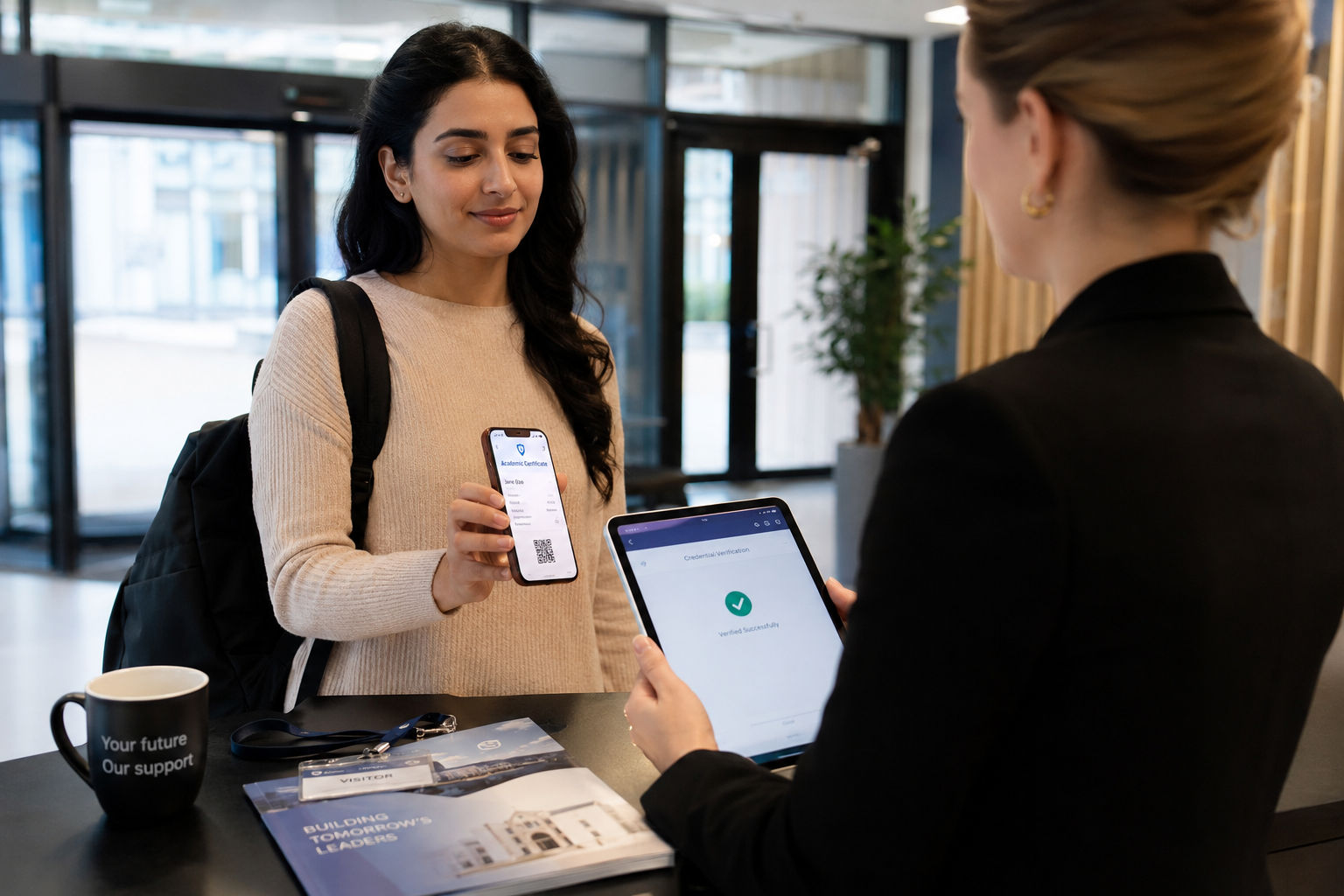
Verifiable credentials utilize advanced cryptographic hash functions that make tampering virtually impossible. Every credential is secured with unique cryptographic keys that can be verified instantly through the blockchain network.
2. Instant Identity Verification & Document Sign Solutions
Instead of weeks of credential verification, institutions can verify credentials in seconds. This accelerates hiring processes, loan approvals, and enrollment processes—critical for businesses implementing identity and access management solutions.
3. Decentralization & Reduced Intermediaries
By storing credentials on blockchain networks, the need for centralized verification bodies diminishes. Users maintain control of their blockchain wallet and credentials, reducing dependency on institutional verification.
4. Cost Efficiency
Organizations implementing verifiable credentials reduce administrative costs associated with manual verification processes, credential management systems, document processing, and identity verification infrastructure.
5. Lifetime Digital Portfolio
Individuals can build a comprehensive blockchain identity and digital portfolio throughout their lives, accumulating professional credentials, certifications, and achievements in one secure location.
6. Transparent & Auditable Records
The blockchain ledger creates permanent, transparent records. Every credential issuance, update, and verification is logged, providing exceptional audit trails essential for compliance.
7. User Privacy & Data Control
Unlike centralized databases, blockchain-based credentials give users explicit control over what information is shared, when it's shared, and with whom—a critical feature for data security and privacy.
8. Global Accessibility
Blockchain networks operate 24/7 across borders, making credential verification accessible globally without geographic limitations.
Verifiable Credentials Cons: Disadvantages & Challenges

1. Technical Complexity
Implementing blockchain solutions requires significant technical expertise. Organizations need skilled professionals to manage blockchain infrastructure, smart contracts, and credential systems.
2. Integration Challenges with Legacy Systems
Many organizations still rely on traditional identity and access management (IAM) systems. Integrating blockchain-based credentials requires substantial technological overhauls.
3. Regulatory Uncertainty
Blockchain technology regulations vary globally. Businesses face challenges understanding compliance requirements for blockchain credentials, particularly regarding digital signature authentication and identity verification regulations.
4. Scalability Concerns
While blockchain technology offers security, some networks face scalability limitations. Processing high volumes of verifiable credential transactions can lead to network congestion and increased costs.
5. User Adoption Barriers
Not all users understand blockchain technology or cryptocurrency wallets. Mass adoption of verifiable credentials requires educational initiatives and simplified user interfaces.
6. Network Dependency
Verifying credentials requires blockchain network access. During network issues or maintenance, credential verification may face delays.
7. Key Management Risks
If users lose access to their blockchain wallet private keys, they may permanently lose access to their credentials—a significant risk for digital asset management.
8. Standardization Challenges
While W3C provides standards, implementing verifiable credentials across different blockchain networks and platforms creates interoperability challenges.
Certopus: Leading the Verifiable Credentials Revolution
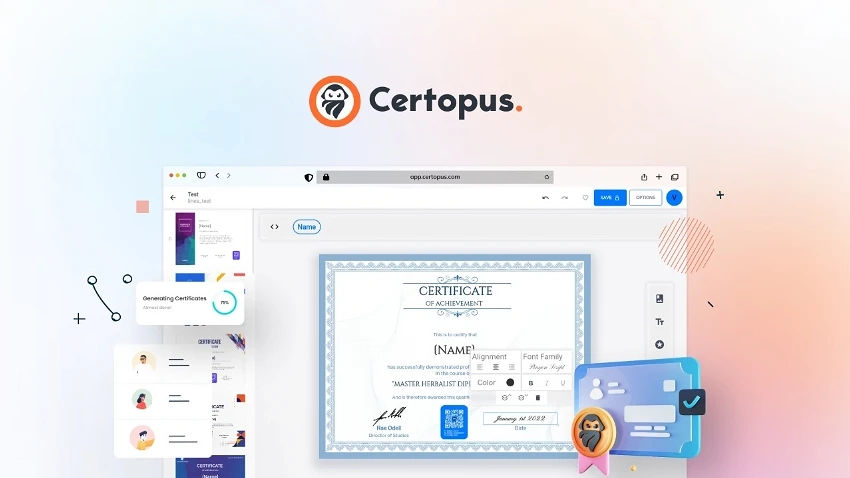
Certopus emerges as a pioneering platform in the verifiable credentials and blockchain space, offering comprehensive solutions for identity verification, digital signatures, and credential management.
Certopus Solutions for Businesses
Certopus provides innovative identity and access management solutions including:
- Verifiable Credentialing Systems: Issue and manage blockchain-based credentials
- Digital Signature Services: Secure document signing with cryptographic authentication
- Age Verification: Advanced age verification solutions using blockchain technology
- Identity Verification: Enterprise-grade identity verification systems
- Verifiable Identity Wallets: Secure blockchain wallets for credential storage
Certopus Use Cases
Certopus serves diverse industries and use cases:
- Financial Applications: Enhanced KYC (Know Your Customer) processes
- Education: Digital degree and certificate management
- Healthcare: Professional credential verification
- Live Events: Attendee verification and credential management
- Professional Certifications: Blockchain-based certification issuance
Practical Applications: Verifiable Credentials Use Cases
1. Education & Blockchain Certification
Universities and training platforms can issue blockchain credentials, allowing graduates to maintain a lifetime verifiable identity with all educational achievements.
2. Professional Services
Lawyers, doctors, and consultants can maintain verifiable credentials proving their qualifications, licenses, and continuous education credits on blockchain networks.
3. Employment & Hiring
Employers can instantly verify candidate qualifications, certifications, and background through blockchain-based credential systems, streamlining recruitment processes.
4. Supply Chain & Business Solutions
Organizations can verify partner credentials, compliance certifications, and supplier qualifications through blockchain, enhancing transparency and trust.
5. Government & Access Control
Digital identity systems for voting, benefits distribution, and public services using blockchain technology for enhanced security and access control.
Blockchain Technology: The Future of Credential Management
The convergence of blockchain technology and verifiable credentials represents a fundamental shift in how we manage identity, trust, and credentials. Key trends include:
- Enterprise Adoption: More businesses integrate blockchain credentials for identity and access management
- Government Initiatives: Governments explore blockchain solutions for digital identity systems
- Interoperability Standards: Development of universal standards for credential exchange
- Enhanced Privacy: Implementation of zero-knowledge proofs for data-minimized verification
- Mobile Integration: Seamless integration with mobile wallets and applications
Implementation Considerations: Blockchain for Business
Organizations considering verifiable credentials should evaluate:
- Use Case Alignment: Does blockchain solve your specific identity management challenge?
- Technology Stack: Which blockchain platform best serves your needs?
- Regulatory Compliance: Understand applicable regulations in your jurisdiction
- Budget & Resources: Assess implementation costs and required expertise
- User Experience: Ensure solutions are intuitive for end-users
- Integration Strategy: Plan how credentials integrate with existing systems
Conclusion
Verifiable credentials on blockchain represent a transformational approach to identity verification, credential management, and digital trust. While this technology offers significant advantages—enhanced security, reduced costs, and improved user experience—organizations must navigate implementation challenges and regulatory considerations.
Platforms like Certopus are making blockchain-based credential solutions accessible to businesses across industries, enabling secure, efficient credential management systems. Whether you're exploring blockchain for business applications, implementing digital signature solutions, or building comprehensive identity and access management systems, verifiable credentials provide a powerful foundation.
The future of credential management is decentralized, transparent, and secure. By understanding both the pros and cons of verifiable credentials on blockchain, your organization can make informed decisions about implementing these transformative solutions.
Ready to Explore Verifiable Credentials? Contact Certopus Today
Schedule a demo to learn more about Certopus for your business use case, or if you have any questions, don't hesitate to contact us. We would be delighted to assist you. Finally, if you're on social media, follow us to remain informed about our latest developments and learn more about digital credentials like certificates, badges, and micro-credentials.
Ready to issue verifiable credentials?
Book a personalized demo with our founder to streamline your digital credentialing workflow.

Frequently Asked Questions
Traditional certificates are static, centralized documents, while verifiable credentials are dynamic, cryptographically secure digital credentials that can be instantly verified without relying on institutional intermediaries.
Verifiable credentials are typically stored inside secure credential wallets or blockchain wallets that use encryption and private key management to protect user data and ownership.
Yes. Blockchain technology uses cryptographic hashing, decentralized validation, and tamper-resistant ledgers that make credential fraud and unauthorized modifications extremely difficult.
Yes. The W3C Verifiable Credentials standard enables interoperability across multiple blockchain ecosystems, allowing credentials to remain portable and verifiable across platforms.
Blockchain credentials help businesses reduce verification costs, improve security, speed up onboarding, simplify compliance audits, and create better user experiences through instant verification.
Digital signatures use cryptographic key pairs to authenticate credential issuers and ensure credentials cannot be altered after issuance, enabling trusted and tamper-proof verification.
Implementation costs depend on infrastructure complexity and scale. While setup may require initial investment, many organizations reduce long-term operational costs through automated verification workflows.
Yes. Financial institutions increasingly use verifiable credentials for KYC verification, customer onboarding, fraud prevention, access control, and identity management processes.
Verifiable credentials enable instant and privacy-preserving verification without requiring users to repeatedly share sensitive physical documents, reducing friction and improving security.
Certopus provides credential issuance, verification, automation, and management solutions that help organizations adopt secure digital credential systems built on modern verifiable credential standards.