
Solutions
TruScholar
•9 min readExplore TruScholar vs Certopus features, blockchain credentials, Open Badges, integrations, and pricing.

Khushi Bhatia
Updated on Jun 16, 2026
In this article
Ready to automate?
Join thousands of organizations using Certopus to issue verifiable digital credentials.
Get Started FreeTruScholar vs Certopus: Which Digital Credential Platform Is Better for Universities?
Quick Answer
TruScholar is a blockchain-centric credential solution, ideal if your only goal is to verify credentials on an immutable ledger. It focuses on issuing tamper-proof certificates and badges. Certopus, on the other hand, is a more comprehensive digital credential platform. It lets organizations design and issue certificates and badges (meeting Open Badges standards), and offers full white-labeling, open APIs, LMS/webinar integrations, and robust support. In short: if blockchain verification alone is your priority, TruScholar fits. If you need a full-featured credential ecosystem (issuance, branding, automation, analytics, etc.), Certopus is the broader solution.
What Is TruScholar?
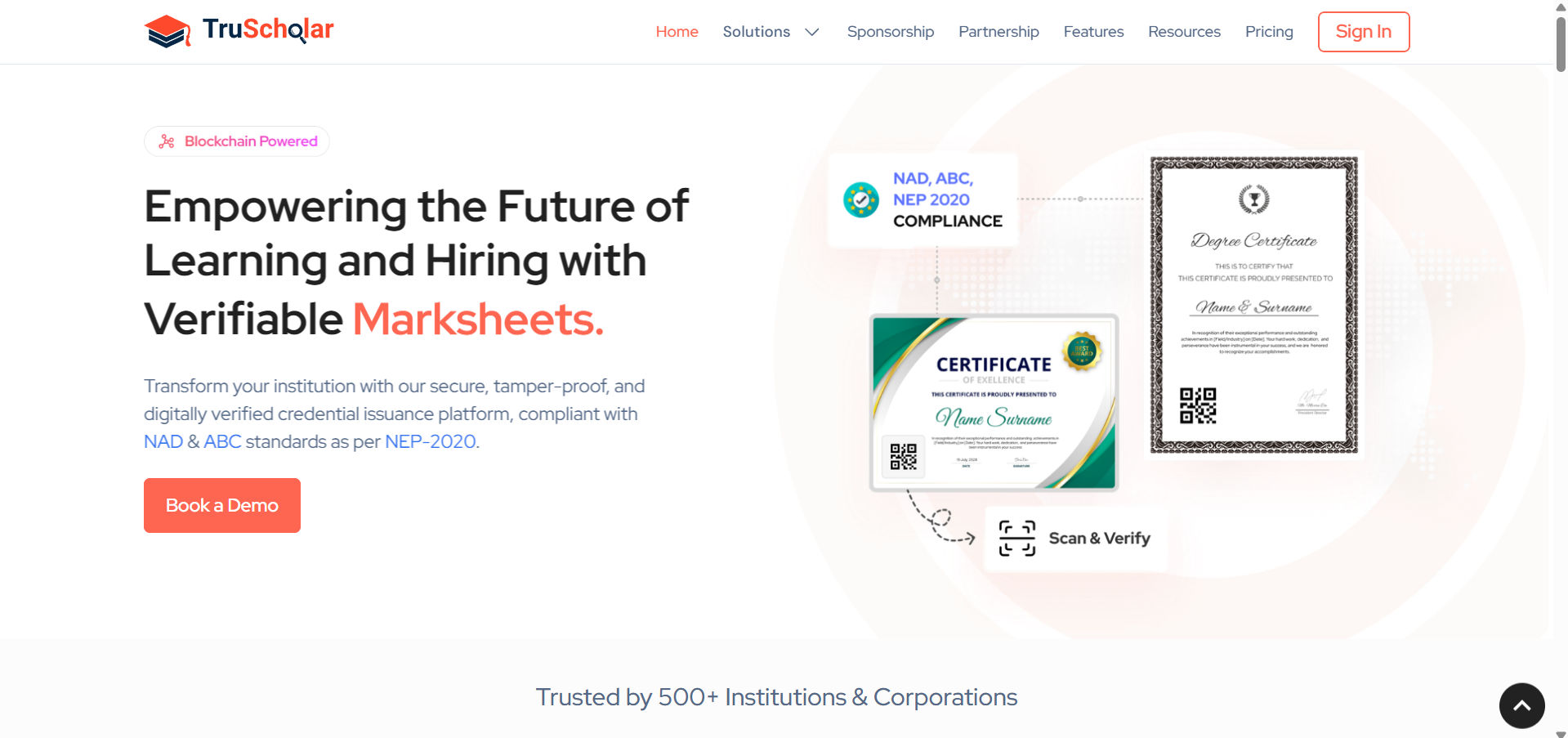
TruScholar is a digital credential platform built around blockchain technology. It issues digital certificates and badges that are recorded on a distributed ledger to ensure authenticity. In practice, this means universities and certification bodies can give students verifiable, tamper-proof credentials. TruScholar was developed (with Hyperledger Indy and W3C DID standards) to empower institutions globally with blockchain-backed issuance and verification. In short, TruScholar helps schools reduce fraud by allowing employers or other institutions to instantly verify a credential's authenticity on-chain. Universities often evaluate it when they want a cryptographic "certificate of authenticity" for degrees and badges.
However, TruScholar primarily addresses verification and security. It ensures every credential is immutable, but it is not a full "issuance and engagement" platform on its own. As one case study notes, TruScholar issues certificates and badges (using Hyperledger Indy) so they can be quickly verified and shared. It has features like an in-built designer tool and templates, but many universities find they also need other tools around the credentials.
Why Universities Need More Than Blockchain
TruScholar Case Study: Securing Credentials with Blockchain
Blockchain encryption makes digital credentials tamper-proof and instantly verifiable, but authenticity alone is only one piece of the puzzle. Even if you know a certificate is real, universities still need ways to issue that certificate, design it with school branding, share it with students and employers, and track outcomes. A modern credential system must include tools for bulk certificate creation, badge design, branded portals, student engagement (like social sharing to LinkedIn), and administrative automation. It also needs integrations with LMS or student information systems so credentials can be issued automatically at course completion.
In fact, expert sources highlight that effective digital credential platforms combine blockchain verification with rich metadata, shareability, analytics and integrations. For example, credentials should embed details like learning outcomes and be shareable to portfolios and social networks so students can easily showcase their achievements. Platforms often tie into other systems (LMS, SIS, HR systems) and provide dashboards for administrators. They support accessibility/compliance standards (like FERPA for student data) and tracking of long-term outcomes. Without those features, a blockchain-only solution leaves out how certificates are created, branded and managed at scale.
In short: blockchain solves authenticity, but universities also need the entire issuance and management workflow. They want a branded credential experience, easy badge/certificate design, automation and analytics to measure impact – capabilities beyond what a single verification layer provides.
TruScholar vs Certopus: Feature Comparison
| Feature | TruScholar | Certopus |
|---|---|---|
| Digital Certificates | Yes (certificate issuance) | Yes |
| Digital Badges | Yes (badges supported) | Yes |
| Blockchain Credentials | Yes (built on blockchain) | Yes (W3C VC, Polygon-based) |
| Open Badges Support | Yes (supports Open Badges) | Yes (Open Badges 3.0 compatible) |
| White Labeling | Contact vendor for details | Yes (custom domains, branding) |
| Open APIs | Yes (REST API via add-on) | Yes (REST API & webhooks) |
| LMS Integrations | Contact vendor for details | Yes (auto-issue via Canvas, Moodle, etc.) |
| Webinar Platform Integrations | Contact vendor for details | Yes (auto-issue for Zoom/Webex) |
| Certificate Maker | Yes (in-app designer tool) | Yes (user-friendly editor) |
| Badge Maker | Yes (same designer tool) | Yes (badge builder) |
| Template Gallery | Yes (built-in templates) | Yes (library of templates) |
| QR Verification | Yes (blockchain proof via QR) | Yes (dynamic QR codes) |
| 24/7 Customer Support | Contact vendor for details | Yes (enterprise plan offers 24/7 support) |
| Custom Pricing | Contact vendor (enterprise) | Yes (flexible tiers and enterprise plans) |
Note: Where a feature is unconfirmed, we recommend contacting the vendor.
Why Certopus Stands Out
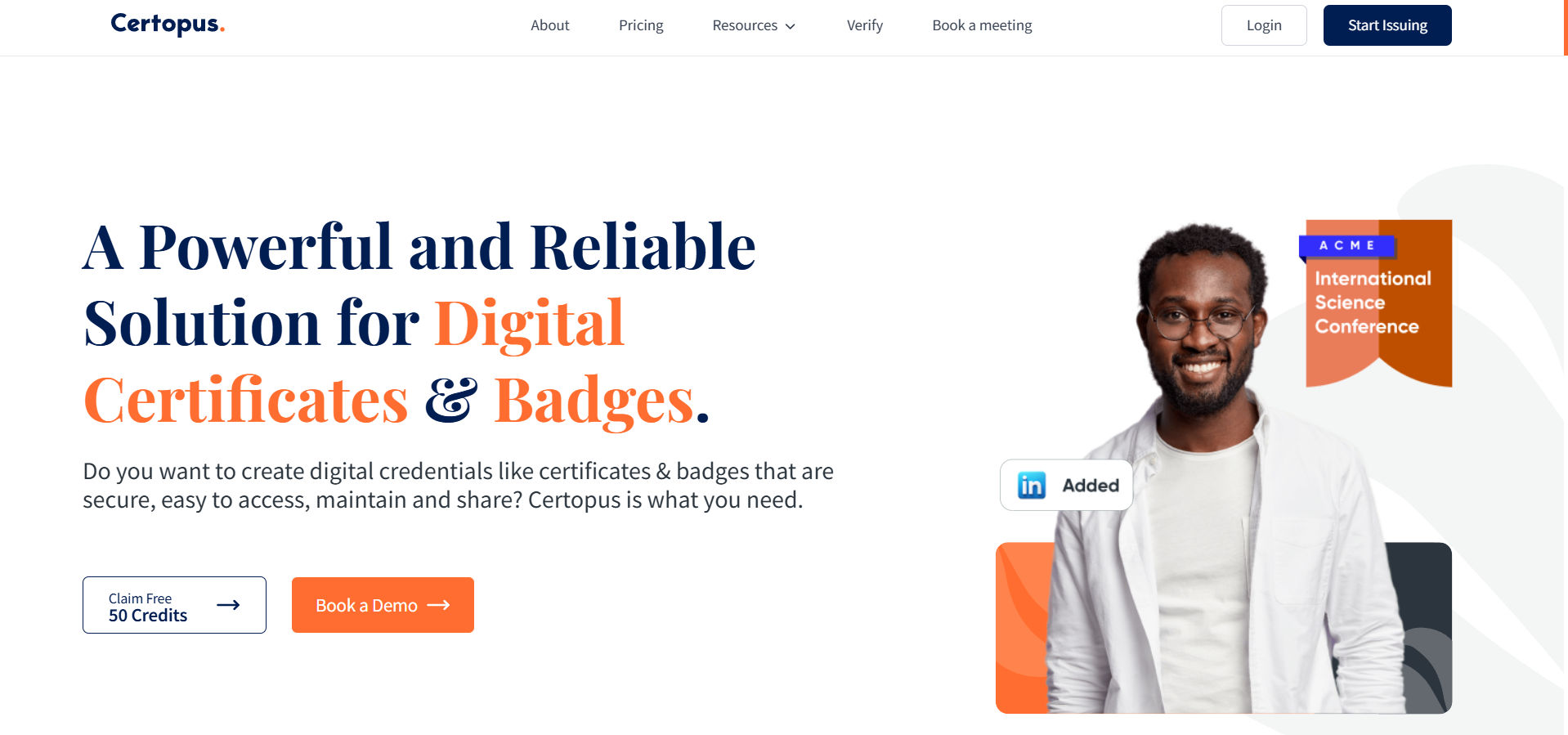
Certopus shines as a full-stack credential solution. It covers everything from certificate design to verification – not just the blockchain aspect.
White Labeling
Universities often want the entire credential experience to look like their own. Certopus offers complete white-labeling, allowing institutions to use their own domain, logos, and color scheme on certificate portals. In other words, a student clicking a credential link sees the university's brand, not a third-party badge. This boosts trust and institutional identity. (By contrast, TruScholar's site does not prominently mention custom domains or white-label branding – you'd need to contact them to see what's possible.)
Open APIs
Flexibility is key for higher-ed systems. Certopus provides a full REST API and webhooks so any university system can automate credential issuance. Whether pushing badge data from an LMS or integrating credentials into a student app, these APIs allow custom workflows. TruScholar offers API integration as well (e.g. optional LMS API), but Certopus explicitly advertises advanced APIs and automation tools (like Zapier support) for seamless custom integrations.
Integration Ecosystem
Certopus integrates with popular educational tools out of the box. For example, it can automatically issue a certificate or badge as soon as a learner completes a course on an LMS like Canvas or Moodle. It similarly connects with webinar platforms (like Zoom or Webex) to issue credentials to attendees. It even works via integration platforms (like Zapier or Integrately) to link with hundreds of third-party apps. These integrations mean credentials can flow smoothly from enrollment or learning events into the Certopus system. TruScholar has some integration options (it mentions Zoom/Meet via Zapier), but Certopus's ecosystem is more extensive and pre-built.
Web3 Credentials Made Easy
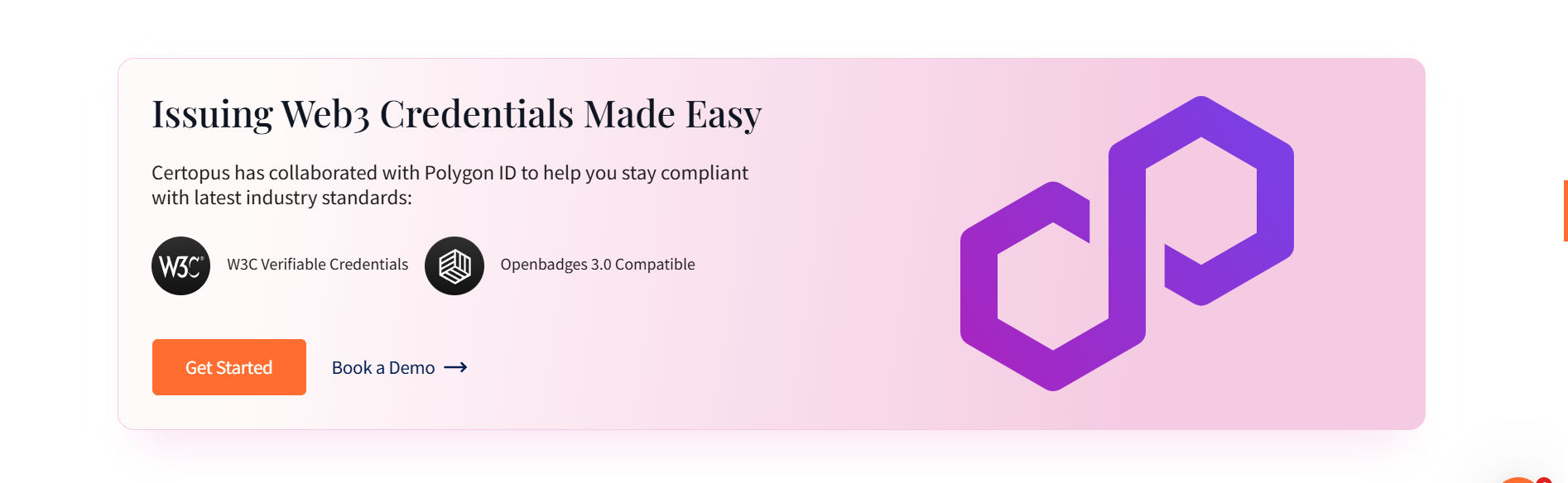
Both platforms support blockchain credentials, but Certopus emphasizes making it simple. It supports W3C Verifiable Credentials and OpenBadges standards through its Polygon ID integration. This means you get the benefits of blockchain-based security without the complexity of building it yourself. In practice, a university can issue "Web3" credentials (verifiable on-chain) through Certopus's interface. TruScholar also uses blockchain (Hyperledger Indy), but if an institution is curious about Web3 credentials but doesn't want to manage the nitty-gritty, Certopus handles the technical work behind the scenes.
Digital Certificate and Badge Creation
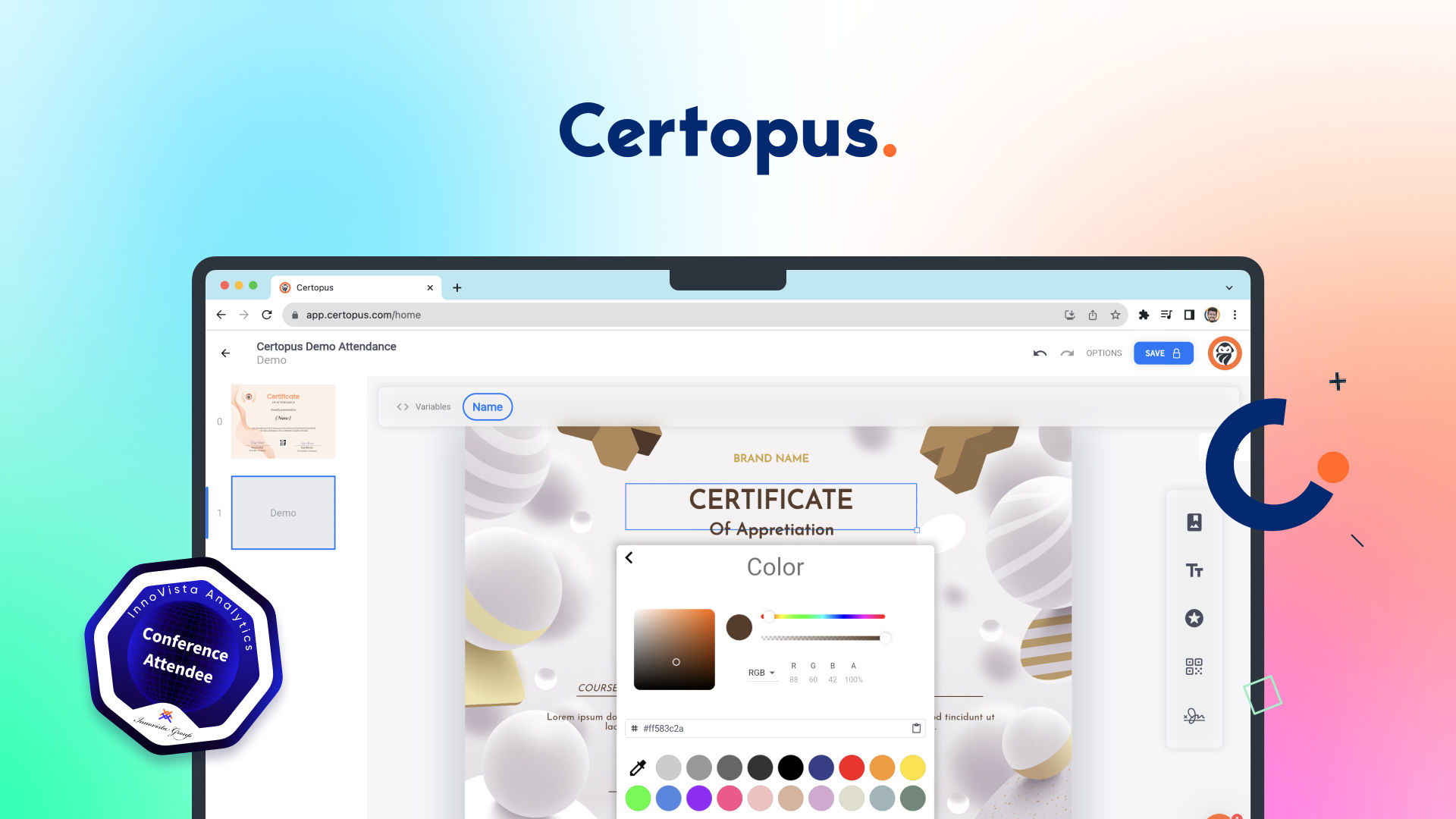
Certopus includes built-in certificate and badge design tools. It offers dozens of professional templates and an editor that anyone can use. You can quickly customize layouts, colors, logos and even generate credentials in bulk. TruScholar likewise provides a designer tool and some templates. But Certopus's large template gallery (for both certs and badges) and modern interface make launching a credential program faster. This reduces manual work: administrators don't have to design certificates in external software or code. They can also save time by using Certopus's AI to auto-generate designs.
Check out the Certopus Badge Creator to create professional, branded digital badges in minutes.
Proven Adoption
Certopus is widely adopted in training and education. Over 3,900 organizations worldwide use it for issuing certificates and badges. Customers report major ROI: one training company said Certopus "saved us time and money by streamlining issuing" and praised its "friendly interface". Another reported 90% lower costs and 50% more student engagement after switching to Certopus. For universities, this means other institutions have found it reliable and effective at scale. TruScholar has its own successes (seed-funded, dozens of Indian universities onboarded), but Certopus's global footprint and case-study results demonstrate broad customer satisfaction.
Responsive Customer Support
During busy periods (graduations, large certification drives), 24/7 support can be vital. Certopus offers premium support tiers: the Enterprise plan includes 24/7 dedicated support and an assigned account manager. Customers like Certopus for its responsive service – one review even notes its support is "excellent". TruScholar also has support, but publicly it does not advertise around-the-clock assistance, so large institutions may want to confirm support availability during peak times.
Pricing Considerations
When choosing a digital credential platform, universities typically evaluate total cost of ownership, implementation effort, scalability, and support quality. Pricing transparency is also an important factor because it helps procurement teams compare solutions more efficiently and plan budgets with confidence.
Certopus publicly shares its pricing options, including a free tier and paid plans starting at $45 per month, making it easier for institutions to understand costs upfront and select a plan that fits their requirements.
By comparison, TruScholar's pricing information is not prominently available on its website, and enterprise pricing details require direct consultation with the vendor. While custom pricing can be beneficial for organizations with unique requirements, limited pricing visibility may extend the evaluation process, as institutions often need additional discussions before estimating total implementation costs.
Ultimately, universities should consider not only subscription pricing but also factors such as onboarding, integrations, support, scalability, and long-term value when comparing credential platforms.
Which Platform Should Universities Choose?
Choose TruScholar If:
- Your sole focus is blockchain-based credential verification.
Choose Certopus If:
- Your focus is blockchain-based credential verification.
- You need to issue both certificates and badges across programs and want a user-friendly designer.
- You want full white-labeling (custom domains, logos, branded emails) so credentials look like they came from your institution.
- Open APIs and integrations are a must (for LMSs, student systems, webinar tools, etc.).
- You value having a template gallery and AI tools to quickly create credentials without external software.
- You want transparent pricing and flexibility (free tier, fixed plans, enterprise deals).
- You plan large-scale issuance (many students/events) and want priority support during busy seasons.
Final Verdict
TruScholar excels as a verification-focused platform. It leverages blockchain to ensure credentials are authentic and easily validated. This makes it a good fit if that specific capability – cryptographic proof of authenticity – is your main goal. However, many educational institutions require a broader credentialing strategy. They need to design, brand, issue, automate, and analyze certificates and badges as part of student services and accreditation efforts. For those use cases, Certopus offers a more complete solution. It provides the full ecosystem (credential creation tools, integrations, analytics, and customer support) that most universities want, while also supporting modern verifiable credential standards. In summary: TruScholar tackles the blockchain problem. But for a comprehensive digital credential program – from day-one design to full lifecycle management – Certopus stands out as the scalable, institution-focused alternative.
Ready to issue verifiable credentials?
Book a personalized demo with our founder to streamline your digital credentialing workflow.

Additional Resources

Certopus Case Studies
See how institutions use Certopus
What Are Digital Credentials?
Platform overview
Blockchain in Credentialing
Technology explanation
Professional Development Programs
Learning solutions
Micro Credentials for Higher Education
Educational pathway